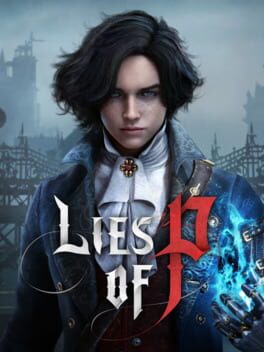

Once upon a time, a video game genre was almost completely dominated by a studio called FromSoftware. A souls formula to enslave them all, drive them to the controllers and bind them forever. But not everyone wanted to surrender to this fate. An alliance of souls elements and a dark fairy tale story, led by the development studio Round8 and the publisher NEOWIZ, achieved the unimaginable: They managed to create a soulslike that can actually be measured at eye level with FromSoftware (well, not quite, but for the dramaturgy of the review, that is better). This is not only because Round8 has obviously understood what Souls fans care about when playing. Rather, it was not just audaciously copied here, but inspired to impose a unique, unmistakable stamp on the genre. A fairy tale for children, mixed with grotesque representations and an unforgivable souls gameplay. What at first glance sounds like a rather abstruse combination, combines surprisingly harmoniously. The story addresses a central question of the original fairy tale: What does it actually mean to be a human being? And can a doll even become a human? In other words, can Timothée Chalamet... uh, I mean P, of course, actually attain humanity? At first glance, it seems to have already been with the similarities to the original work. However, if you delve deeper into the matter and work your way through the shallow YouTubes, you will quickly realize how many more inspirations and interpretations are hidden in the story. And in fact, you can only wonder what Round8 has created here from a supposedly simple fairytale template. And so we would already be at the absolute heart of the game: the combat system. In my opinion, it is among the best that the soulslike genre has produced so far. The different enemy attack types lead to a consistent integration of the paring, without pushing the classic evasion into the background. This gives each player the freedom to develop their own fighting style. However, I would advise neither to rely solely on parrying nor solely on evasion. The combination of both mechanics makes the combat system so pleasant and varied. It is above all the small details that make the whole thing so special: A critical hit can only be executed after sufficient paring and a charged heavy attack. Red attacks can only be defended by perfect parry and not simply by evasion. Damage sustained during blocking can be partially restored by subsequent attacks, and even the last remaining healing potion can be recharged by successful fighting. The latter has provided me with some of the sweatiest boss fights. When the pulse cell is depleted, you have only a tiny remnant of life and know that you can earn another healing through successful parades and attacks, a tension arises that I will not soon forget. The game rewards aggressive and precise play and at the same time manages to push your limits again and again. Especially in the DLC, Lies of P once again comes to the highest form. Here both the combat system and the boss fights shine, which for me are the absolute highlights of the entire game. Of course, not everything is perfect. The level design is comparatively linear and offers little space for exploration away from the given path. Those who are looking for extensive areas, hidden dungeons and the freedom of an open world will probably not get their money's worth here. However, Lies of P manages to make almost every area feel special and distinctive in its own way. For me personally, the lesser freedom in exploration therefore hardly disturbed me. Lies of P is therefore not just another soulslike for me, but rather the pioneer of a new era in which FromSoftware no longer alone sets the standards for the genre.
Translated from German
Comments
0No comments yet.
Sign in to comment.