← All events

Ended

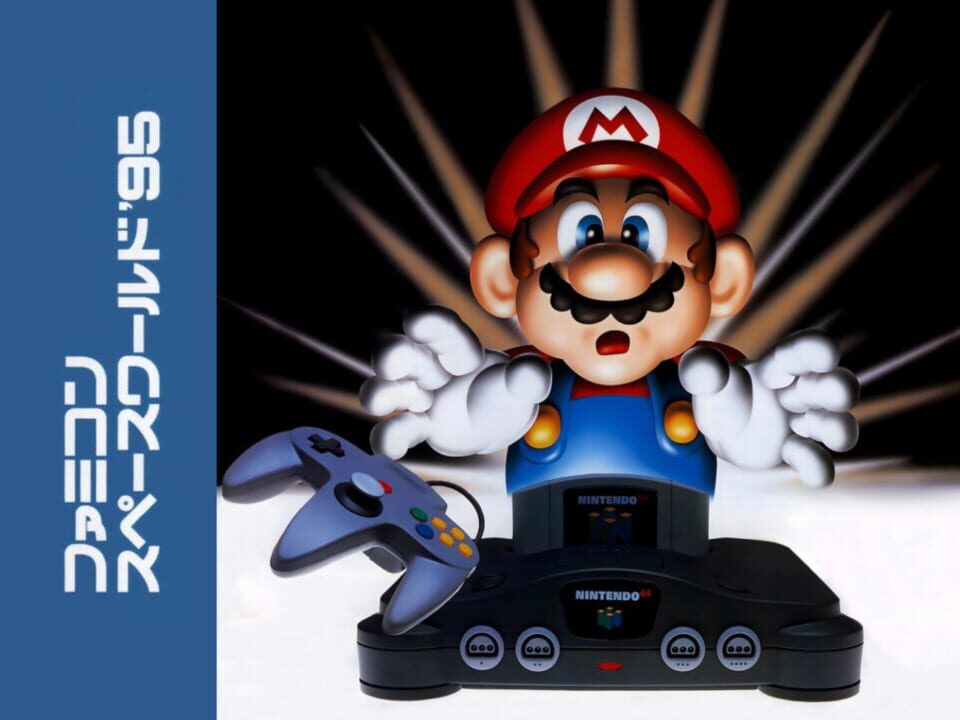
Dai-7-kai Shoshinkai Soft Tenshikai / Famicom Space World '95

Wed 22 Nov – Fri 24 Nov

160 games shown

About

The seventh in the line of Shoshinkai events, it took place in Japan in 1995. Also known as Shoshinkai 1995, it marked the reveal of the Nintendo 64 and its initial line-up of games. The Shoshinkai was a group of companies that worked with Nintendo, and they were the main organizers of these events, which happened one after t he other, with the first being a press conference, followed by a public exhibition, the Space World.

Games from this event

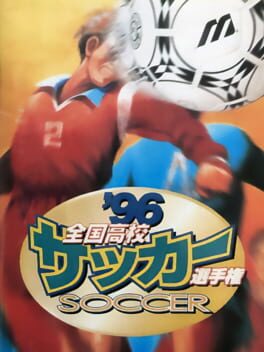
  • '96 Zenkoku Koukou Soccer Senshuken1996

    The video game features teams from the Japanese high schools from the islands in addition to the mainland. One of the more notable players in the game is Shunsuke Nakamura who played for Tōkō Gakuen High School. The game has some similarities with Hat Trick Hero, Aoki Densetsu Shoot! or any other soccer game with the left-right perspective, and Top Striker or Libero Grande because of the ability to play as just one player, instead of controlling the whole team. This feature would serve as a model for the "career mode" provided in most modern EA Sports games. There were many other improvements over the two original versions. One of the most important being the availability of creating and customizing an own character/football player and training with the instructor before each match, among other options. Coaches give out verbal reports that range between "perfect" and "needs improvement." This game is a sequel to Zenkoku Kōkō Soccer and Zenkoku Kōkō Soccer 2.

  • 3-D Tetris1996

    3-D Tetris is a video game released for the Virtual Boy in 1996. A Japanese version was planned, to be called Polygo Block, but production of games was ceased due to lack of interest in the Virtual Boy system. This was the last game released on the Virtual Boy. The mesmerizing force of Tetris returns with virtual style! This thrilling animated puzzler takes dexterity and split-second timing to the extreme with dimensional blocks and challenging planes. 3-D Tetris propels players at a demanding pace where quick response and strategy rule. Tetris devotees of all levels will crave this latest sensation of brain-teasing fun!

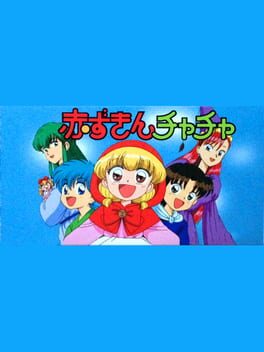
  • Akazukin Cha-cha1996

    Akazukin Cha-cha is the story of a young magical girl named Chacha. She lives in a cottage on Mochi-mochi Mountain with Seravy, her guardian and teacher, who is the fictional world's greatest magician. Chacha is clumsy in casting her spells, frequently mistaking homonyms, she summons spiders (kumo (蜘蛛?) in Japanese) instead of a cloud (also kumo (雲?)). When she and her friends are in trouble, however, her spells do work. Living on the same mountain is a boy named Riiya, gifted with enormous strength, who comes from a family of werewolves. Far away from Mochi-mochi Mountain is Urizuri Mountain where Dorothy, a well known magician, lives in a castle with her student Shiine. Shiine is a young wizard, who is adept at casting spells and barriers, as well as transformations.

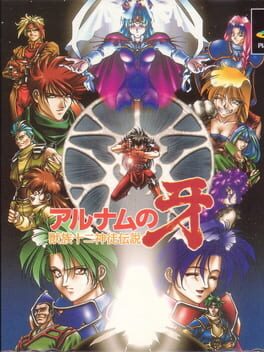
  • Alnam no Kiba: Juuzoku Juuni Shinto Densetsu1994

    Alnam no Kiba: Juuzoku Juuni Shinto Densetsu is a 1994 Japanese role-playing game (RPG) about a young beastman named Kenbu, whose village is attacked by monsters. To protect his people and avenge his mentor, Kenbu leaves home to fight alongside other heroes and discover the origin of the creatures threatening the world.

  • Anubis of the Moon's Surface1995

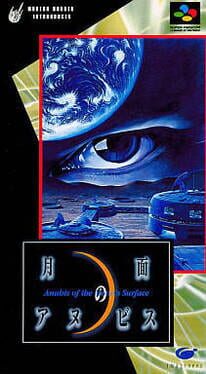
    Getsumen no Anubis is an Adventure game, developed by Access and published by Imagineer, which was released in Japan in 1995.
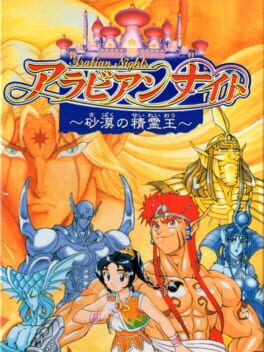
  • Arabian Nights: Sabaku no Seirei-ou1996

    In this Japan-exclusive Super Famicom game, the player assumes the role of an orphan named Shukran, who is accompanied by the djinn Ifrit on her adventures to bring peace to her desert homeland.
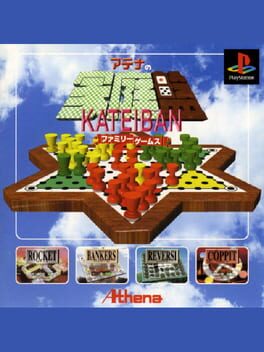
  • Athena no Kateiban: Family Games1996

    Variety game collection was recorded board game of nostalgia. I record five sugoroku like to play using the board that mimics of Othello-like "Reversi", the luster of diamond "King Diamond", hat up game "Kopit", "rocket", the Game of Life-style of "Bankers". Can be simultaneously play up to four people maximum. Let Moriagaro in the good old game a long time ago!

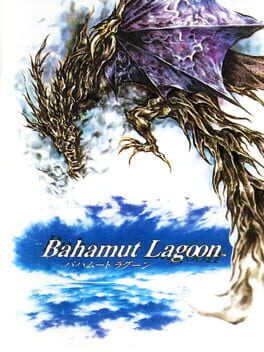
  • Bahamut Lagoon1996

    Bahamut Lagoon combines RPG mechanics with squad-based combat. Characters have HP, MP (SP for fighter characters), EXP, equipment, stats and class-specific, SP-draining special elemental abilities very much like traditional console RPGs. The player can explore his surroundings, talk to people and visit shops when not in battle, though to a limited degree as there is no world map and no way to leave the current area. The game's core is its turn-based battles fought on a 2d grid. Characters are assembled into parties of four and the player allowed a maximum of six parties, which are usually well outnumbered. The two opposing sides act in alternating turns so that each party can move once and/or attack once a turn. Attacks are divided into distant and close-up combat. In the former, a party uses a special ability (e.g. casting fireballs, throwing lightning, healing allies) of one of its members at a distance. The range and possible area of effect damage vary per ability. If the attacking party has two or more characters with the same ability, they join in the action to multiply its effectiveness. Distant combat results in less money and generally less damage, but the target cannot retaliate. Distant attacks can also affect the field; fire and ice ignite or extinguish forests and melt or freeze ice, etc. Close-up, each unit in two adjacent opposing parties can act once. Very much like Final Fantasy SNES combat, they can attack an enemy, use an item or a special ability (though t

  • Bakumatsu Kourinden Oni1996

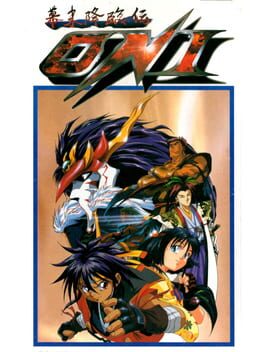
    Bakumatsu Korinden Oni is a Role-Playing game, developed by Pandora Box and published by Banpresto, which was released in Japan in 1996. This is the seventh title in the ONI series and is set in Japan approximately 670 years after the previous title, Kishin KouRinden ONI. The two titles share the same world and common characters. It is also notable for the appearance of historical figures such as the Shinsengumi, Ryoma Sakamoto, and Yoshinobu Tokugawa.

  • Ball Bullet Gun: Survival Game Simulation1995

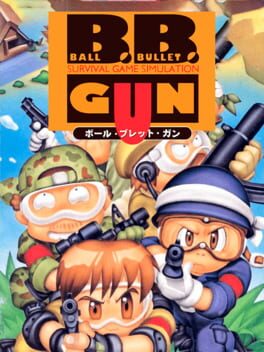
    A turn-based strategy game based on paintball simulation battles. Ball Bullet Gun: Survival Game Simulation is a Japan-exclusive turn-based strategy game for the Super Famicom. The game allows the player to create a party of "soldiers", though the implication is that these are regular civilians taking part in a military simulation, and determine their names, faces and loadouts. The player then takes this team through a series of missions, using whichever members best fit the criteria. The game makes heavy use of fog of war, making it impossible to see the enemy's team unless they get within visual range. The player characters can use cover and change the direction they're facing, which allows them to get the drop on enemies. Everything - movement and reloading or shooting a weapon - requires a finite number of "AP" that replenishes after each turn. Both sides take turns to be the remaining team on the field.

  • Battle Arena Toshinden1996

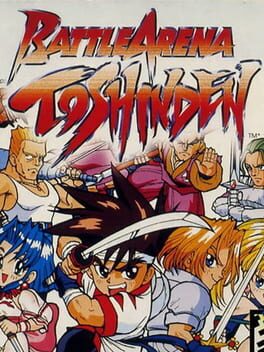
    Battle Arena Toshinden was ported to the Game Boy by Takara in 1996, titled Nettou Toshinden in Japan. The game is based mostly on the original PlayStation version, but it includes a slightly altered story mode and an early appearance of the character Uranus and the Battle Arena Toshinden 2 version of Gaia (without his armor).

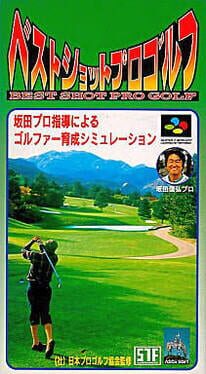
  • Best Shot Pro Golf1996

    Best Shot Pro Golf is a Sports game, developed by Kid and published by ASCII Entertainment, which was released in Japan in 1996.
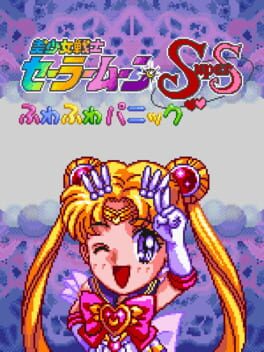
  • Bishoujo Senshi Sailor Moon Super S: Fuwa-fuwa Panic1995

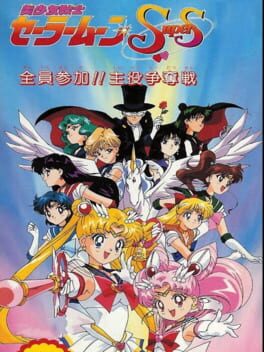
    Bishoujo Senshi Sailor Moon Super S: Fuwa-fuwa Panic ("Pretty Soldier Sailor Moon Super S: Floating Panic") is a puzzle game licensed by Bandai that features the various Sailor Guardians, including the new "super" transformations of Usagi Tsukino (Sailor Moon) and Chibi-usa (Sailor Chibi Moon) that debuted in the "Super S" season, which was the name of the fourth season of the anime adaptation.

  • Bishoujo Senshi Sailor Moon Super S: Zenin Sanka!! Shuyaku Soudatsusen1996

    This game is the sequel and an update to Sailor Moon S: Jougai Rantou!? Shuyaku Soudatsusen. The Sailor Senshi are fighting to choose a new leader. After defeating an enemy, Sailor Moon was teased by Sailor Chibi Moon and Sailor Mars, who called her undependable. The rest of the Sailor Senshi then decided to have a contest to choose a new leader. This game is based on the popular Anime series "Sailor Moon" and was released only for the japanese Super Famicom.

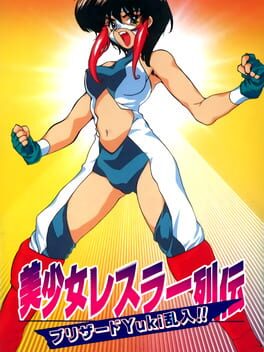
  • Bishoujo Wrestler Retsuden: Blizzard Yuki Rannyuu!!1996

    Blizzard Yuki must take on the Wrestle Angels and make her way to the top of the promotion to become the dominant female wrestler! Battle several of your favorite Wrestle Angels and use the familiar V1 card system!
  • Blast Corps1997

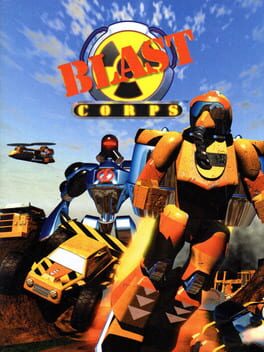
    Blast Corps is a 1997 video game for the Nintendo 64 developed by Rare and published by Nintendo. Destroy a series of buildings or objects using a variety of unique demolition vehicles, in order to mainly clear a path for trucks carrying defective nuclear missiles.
  • Body Harvest1998

    The year is 2016. Humanity has been reduced to a few survivors inhabiting the orbital space station Omega. Over the course of the history, aliens visited the Earth every twenty-five years, "harvesting" humans as an organic material. Eventually, they launch an assault on the last remnants of the human race. But Adam Drake, a genetically engineered soldier, comes into possession of a time-traveling device. He uses it to travel to the time periods of human history when aliens performed their deadly attacks. The fate of humanity is in his hands. Body Harvest is an action and driving game with a mission-based structure. The protagonist travels to various locations and eras (e.g. Greece during World War II, Siberia in the 1990s, etc.) with the goal of stopping alien invasions. Missions can be accessed by traveling to specified areas on the map. Adam can move on foot and use his weapons to kill aliens; however, vehicles usually prove to be a more reliable way of tackling most missions. Adam can use most of his weapons while in a vehicle; in addition, some vehicles are outfitted with their own weapons.

  • Bound High

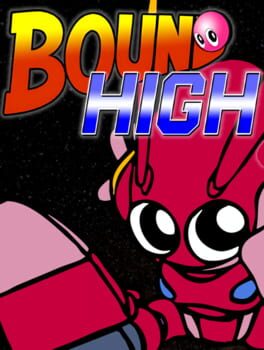
    Originally developed by Japan System Supply, Nintendo liked the game idea of Bound High! and took over the project later. The game was, besides Dragon Hopper, going to be one of the games, which should have saved the system with a relaunch, but it was delayed again and again until it was cancelled because of the lack of success of the Virtual Boy. At this time, the game already was completely finished. In Bound High!, Chalvo, the bouncing robot, travels through space In full 3d-D motion in pursuit of alien invaders that threaten the peaceful inhabitants of Earth. Angling from above, players control rolled up Chalvo, who must destroy all enemies on the playfield by landing on them and throwing them down from the playfield. Falling off the playfield himself, Chalvo will loose a life. The playfield is in space, or high above the earth, and is made of many little squares, which are composed differently from level to level, once big plain areas, once many small, scattered blocks. Bouncing over the platforms can be quite incalculable and dangerous, while some are solid, other ones vanish after one hit or reveal puzzles, items or other objects and besides a lot of different enemies, Chalvo also has to carefully avoid winds, the deep crevices, sharp spikes and highly charged electric "shockers" that cause his demise. Adding to the difficulty is the rebound angle when you hit a moving enemy - you don't necessarily bounce straight up in the air. Sometimes blocks lead to an "Another St

  • Buggy Boogie

    Buggy Boogie was a car combat game/kart racer being developed by Angel Studios. It was later cancelled by publisher Nintendo.

Showing 20 of 160